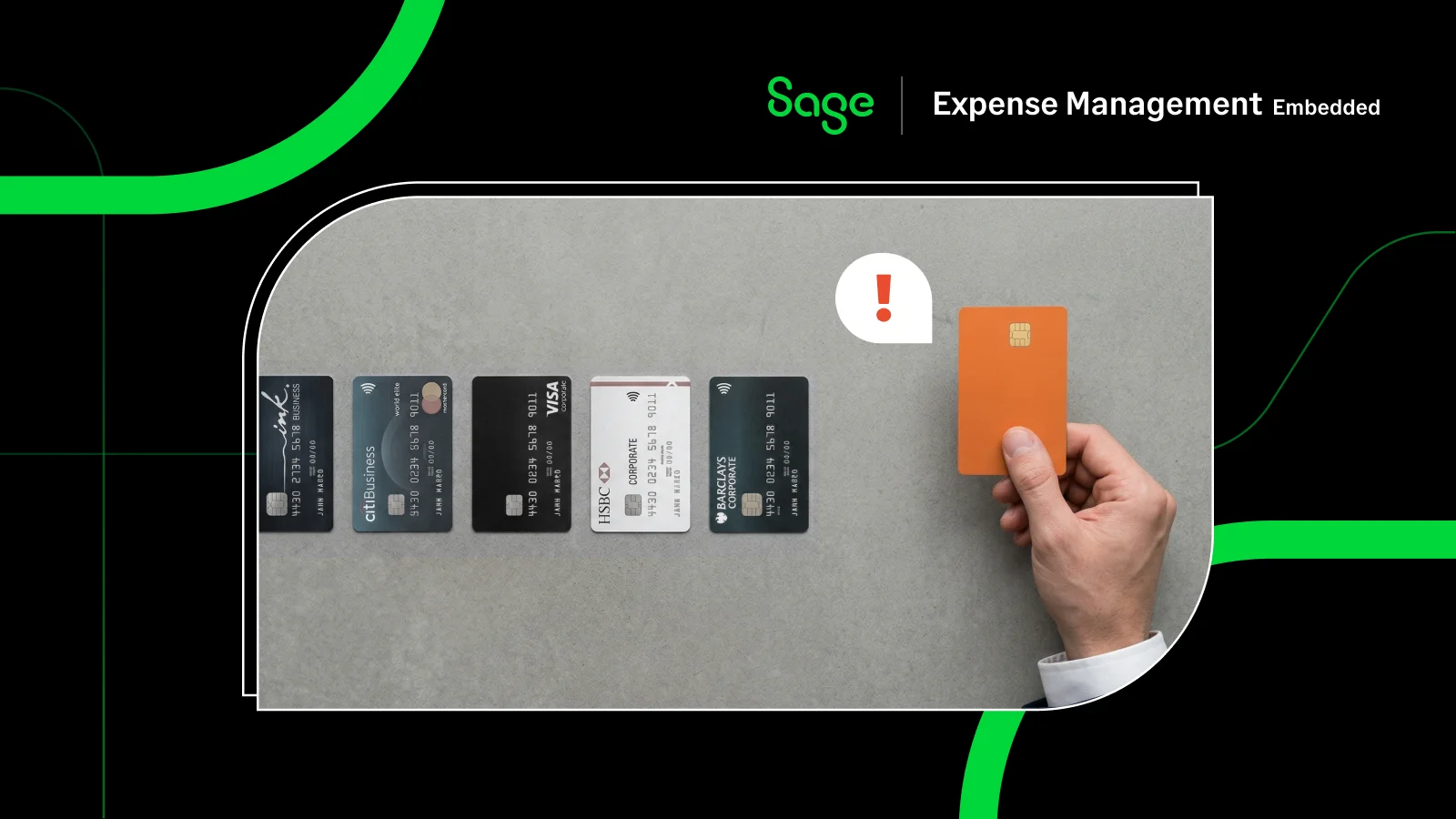

Your commercial client didn’t call to close their account. They didn’t send a formal letter terminating the relationship. In fact, on your dashboard, the account still looks “active.”
But if you look closer, something is missing.
The daily transaction volume has flatlined. The card swipes have vanished. Your client hasn’t left your bank—they’ve just moved their operating reality somewhere else. This is the “Silent Churn.”
It’s the leading indicator of a much larger crisis: the loss of your commercial deposits.
It Starts with a Card
Fintechs like Ramp and Brex aren’t just selling “pretty credit cards.” They are selling a solution to a problem that has plagued your clients for decades: the manual, soul-crushing chore of expense management.
We know how much this weighs on your treasury teams. You see the frustration when clients ask why their corporate card doesn’t talk to their accounting software, or why they still have to chase employees for crumpled paper receipts at the end of every month.
The “Land” Strategy
The fintech enters the building as a “software-first” tool. They promise the CFO real-time visibility and promise the employees an experience as simple as a text message. They land in the CFO’s wallet by solving a friction point that legacy banking cores have historically ignored.
From Spend Churn to Deposit Churn
Once a fintech “lands” the card spend, they have something more valuable than interchange: they have the data.
The “Expand” Strategy
When a fintech owns the expense data and the AP/AR workflows, they become the client’s primary financial interface. They aren’t just a card anymore; they are the operating system. This is where the real threat to your deposits begins:
-
High-yield vacuum: With a bird’s-eye view of the client’s cash flow, fintechs can trigger perfectly timed offers for high-yield treasury accounts.
-
The sweep: They make it effortless for clients to “sweep” their non-interest-bearing (NIB) deposits out of your bank and into their yield-bearing fintech ecosystem.
-
The result: Your bank is left holding the “dust”—the small, stagnant balances—while the high-velocity operating capital moves to the fintech.
If you lose the spend, you lose the visibility. If you lose the visibility, you eventually lose the deposit.
Why Your “Relationship Banking” is Your Secret Weapon
It is easy to feel like you are losing a race against Silicon Valley’s engineering budgets. But regional and community banks have an advantage no fintech can code: deep, credit-backed trust.
Fintechs often “lend” based on the cash sitting in a checking account—it’s essentially a collateralized limit. You, however, offer true credit and long-standing relationships that help businesses grow through cycles.
The problem isn’t your banking; it’s the wrapper around it. Your clients don’t want to leave you; they just want to stop chasing receipts.
Reclaiming Your Turf
You don’t need to spend $100M and three years rebuilding your tech stack to compete. The answer is Embedded Expense Management
Sage’s solution is designed to bridge the gap between your bank’s stability and the fintech’s agility.
We turn your existing Visa or MasterCard into a “Gen 3” powerhouse without you having to touch your FIS or legacy core.
-
Real-time purchase alerts: When an employee swipes your bank-issued card, they get an instant text. They snap a photo, and the receipt is matched and coded instantly using AI.
-
Zero-to-Live in 4 Months: We understand that “bank time” and “market time” are often at odds. Our embedded stack allows you to launch a fully white-labeled solution in weeks, not years.
*Card Agnostic Power: Whether your client is on a small business bin or a large corporate program, they get the same unified, high-end experience.
The Bottom Line
Don’t wait for the deposit balances to drop before you realize the relationship is in trouble. By embedding expense management into your cards today, you aren’t just “offering a feature”—you are building a fortress around your deposits.
Better than fintech cards, without changing your cards.