
For a regional bank, commercial card stickiness is a direct driver of non-interest income. Every time a commercial client utilizes a fintech card instead of your bank-issued card, there is a measurable loss in high-margin interchange revenue.
The market is currently witnessing an estimated $50 billion per year in spend volume migrating from traditional banks to fintech “aggressors”. This shift isn’t driven by interest rates; it’s driven by the “smart” software wrapper that fintechs bundle with their cards to solve back-office friction.
The Utilization Gap and “Silent Churn”
To calculate true ROI, banks must look beyond total account closures and analyze the utilization gap. Many institutions are experiencing “silent churn,” where a client maintains their primary deposit relationship but moves 80% of their operational spend to a fintech platform to access better expense tools.
Embedding frictionless spend management into your existing cards allows you to reclaim this volume by addressing the “path of least resistance”:
-
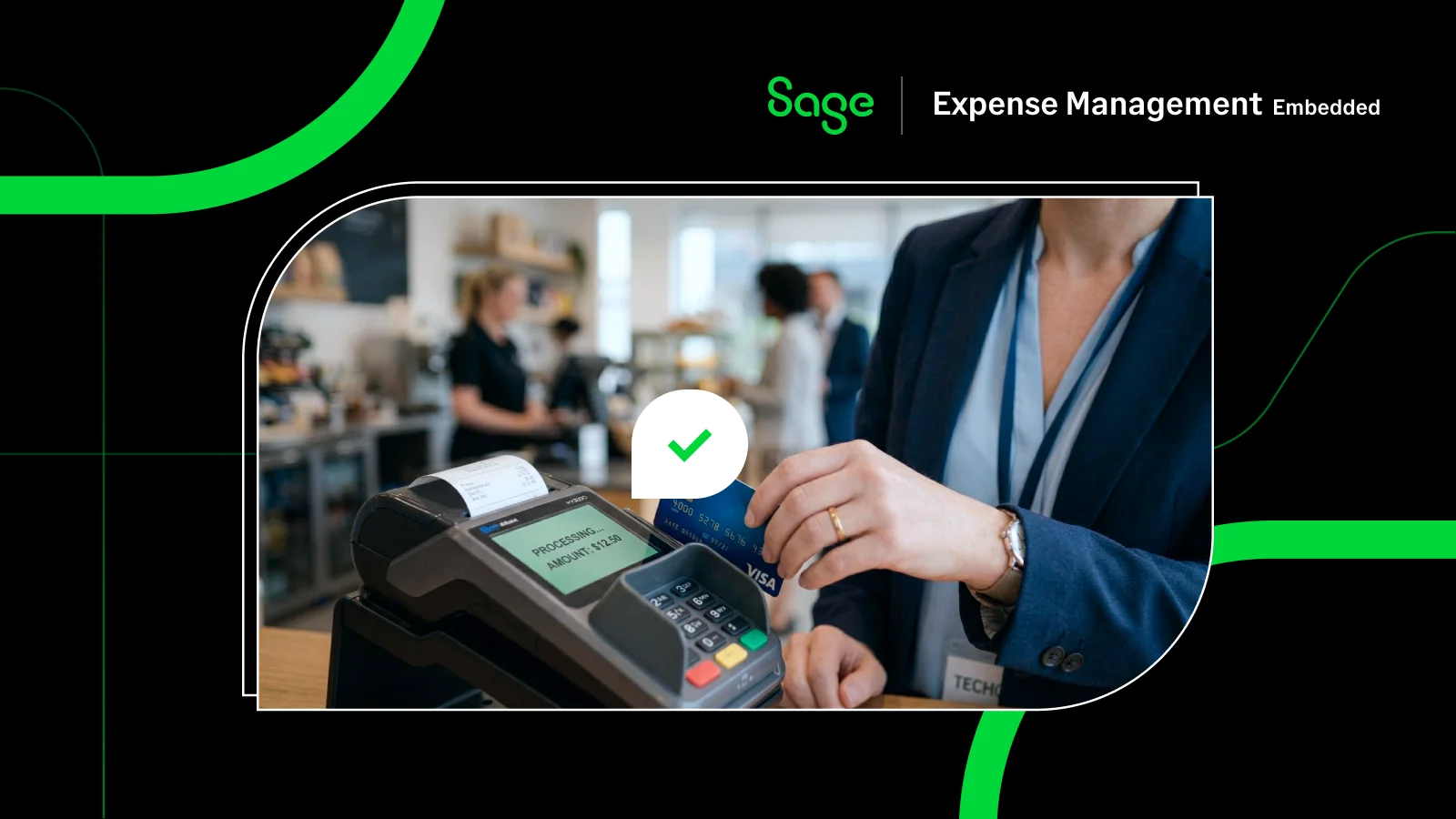
Top-of-wallet dominance: When a card swipe triggers an immediate text message for receipt capture, employees are more likely to use that card consistently for all business expenses.
-
The 169% jump: Data shows that moving from legacy batch card feeds to real-time transaction feeds can result in a 169% increase in spend volume on those specific cards over a six-month period.
-
Revenue protection: By deploying a competitive tool on your existing card infrastructure, you recapture leaked interchange without the operational cost of re-issuing cards to your entire portfolio.
Operational Efficiency: Reducing Manual Oversight
The ROI of frictionless spend extends into the efficiency of your internal operations and the satisfaction of your commercial clients’ finance teams. Traditional, clunky portals often require significant manual intervention from bank support staff and the client’s own accounting department.
-
Systematized compliance: Moving to a simple but automated system like text message that requests receipts within seconds of a transaction increases receipt collection rates by 85.87% in the first 24 hours.
-
Support burden reduction: Automated matching and coding significantly reduce the volume of troubleshooting calls related to login issues or manual file uploads, freeing your team to focus on revenue-generating activities.
-
Sales enablement: Providing a modern, mobile-first tool equips your team to compete effectively against fintech offerings during the prospecting phase.
Strategic Speed to Market
Regional banks cannot afford to wait for legacy processor roadmaps that stretch into 2026. The most significant ROI is achieved through speed.
You can launch Sage Expense Management, a fintech-grade, white-labeled experience in under 4 months.
By embedding expense management today, you protect the high-margin interchange revenue and the core operating deposits that are critical to your lending margins.