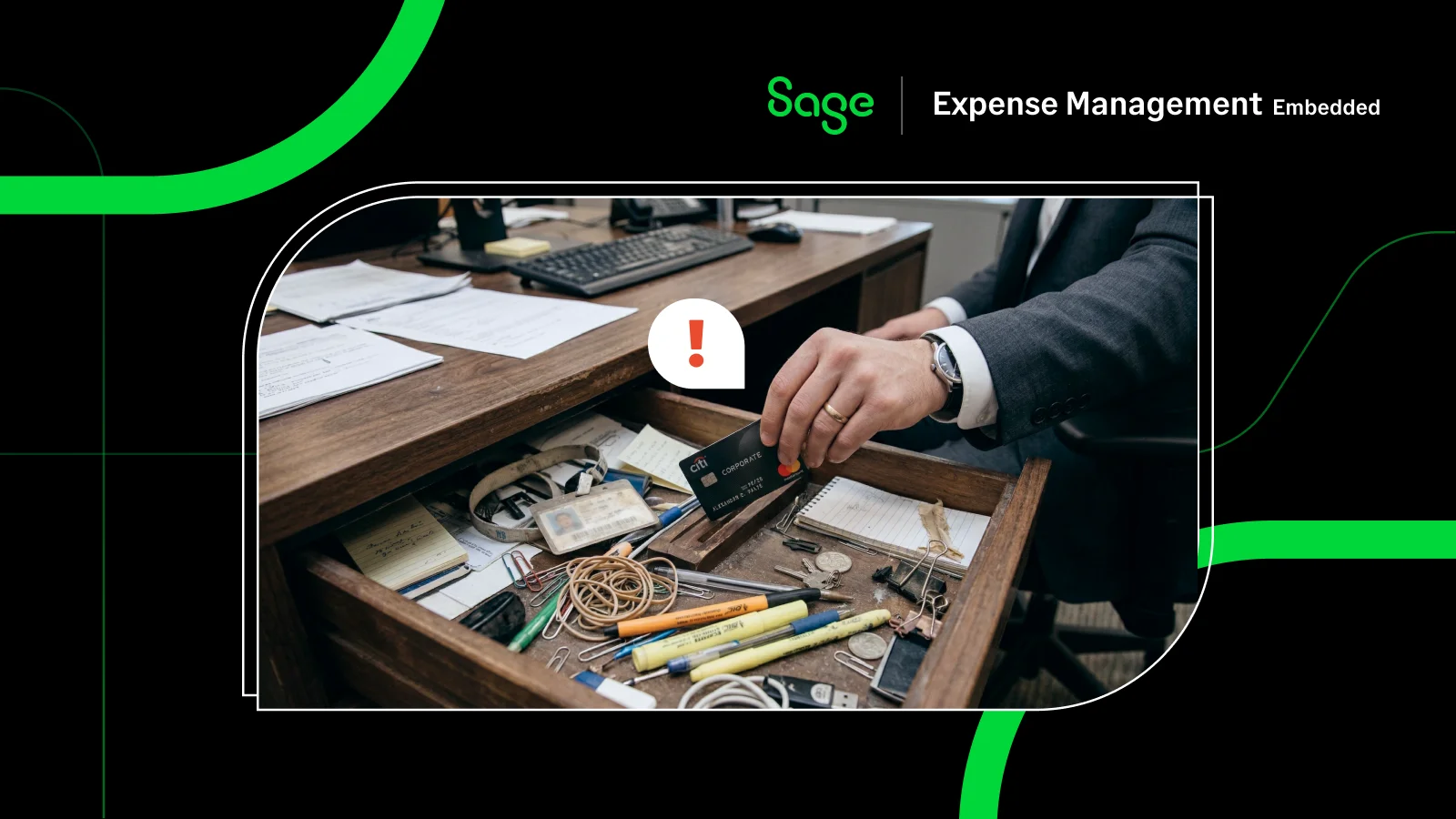

Your commercial client didn’t call to close their account. On your dashboard, the relationship still looks completely active. But if you look closer, the daily transaction volume has flatlined. This is “silent churn.”
The client hasn’t left your bank; they have simply moved their daily operational spend to a fintech competitor’s card to get better expense software. Your bank card has been relegated to the drawer, pulled out for emergencies only.
When this happens, you lose the high-margin interchange revenue—a market where approximately $50 billion per year is at stake. Here is the exact friction causing this churn, and how you can eliminate it to win back “top of wallet” status.
The “Laptop vs. Ladder” Disconnect
The root of the problem is that legacy bank-issued tools are built for accountants sitting at desks. However, your commercial clients are increasingly out in the field working in construction, energy, or logistics.
Picture a construction foreman standing on a ladder or driving a work truck. He physically cannot log into a clunky desktop portal to categorize a Home Depot expense. The bank’s current tools require him to save a paper receipt and hand it to a bookkeeper weeks later.
As a result, the receipt inevitably gets lost on the dashboard of his truck. Because your card is too hard to use in the field, it simply doesn’t get used.
The Hidden Cost: Bankers as “Tech Support”
This friction doesn’t just annoy clients; it creates massive operational drag internally. Because legacy tools are unintuitive, your bank’s relationship managers (RMs) get dragged into low-value troubleshooting.
Instead of selling new loans, RMs are fielding calls about password resets or explaining how to upload CSV files. Even worse, they are forced to act as “the bad guy,” constantly nagging clients for missing receipts to meet compliance standards.
RMs end up avoiding mentioning your treasury products entirely because they know it leads to support headaches.
How Fintechs Capitalize on Your Friction
Card-first players like Brex and Ramp are actively attacking banks by bundling corporate cards with modern expense software. They are winning precisely because they solve the back-office friction that legacy processors ignore.
Once they land a customer with a better card experience, the client moves roughly 20% of their spend to the fintech.
Reversing the Economics with Zero Friction
Card stickiness equals revenue. To win, you must make your bank card the path of least resistance.
By partnering with Embedded Expense Management, you can transform your existing commercial cards into smart cards without a multi-year IT rebuild.
-
Meet them where they are: We offer zero-app, mobile-first receipt capture. When an employee swipes your bank-issued card, they instantly receive a text message prompting them for a receipt.
-
Zero learning curve: They simply snap a photo, respond to the text, and they are done. There is no training required; everyone knows how to send a text message.
-
Automated coding: Our AI automatically extracts the data, codes it to the right chart of accounts, and pushes it for verification. Let our code be the “bad guy” that enforces compliance policies, so your RMs don’t have to.
The ROI of Automation
If an employee knows that your card triggers an instant text message for a receipt (zero friction), while the competitor’s card requires a manual login and upload (high friction), they will use the bank card 100% of the time. In fact, moving to real-time feeds and SMS receipt capture has been shown to drive a 169% jump in spend volume on Visa cards.
Stop Waiting for Vendor Roadmaps
You are not held hostage by massive legacy processors (like FIS or Fiserv) whose mobile app roadmaps get delayed by years. We provide a wrapper solution; a modern UI layer that sits right on top of your legacy rails.